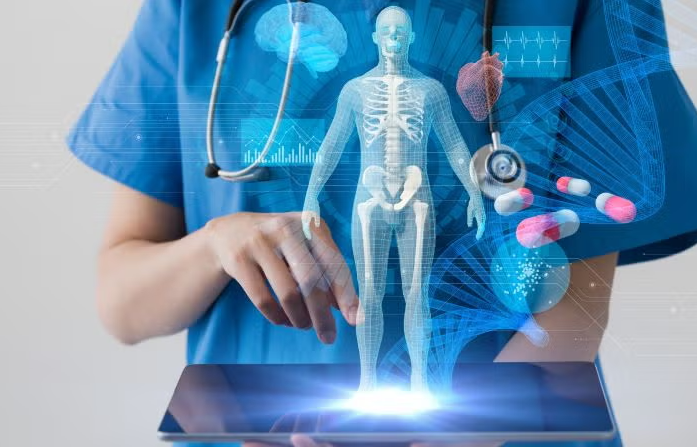
AI is transforming personalized medicine by enabling precise analysis of complex patient data. Advanced algorithms identify genetic variations, allowing healthcare providers to tailor treatment plans. This not only increases the efficacy of therapies but also reduces the risk of adverse effects. As AI continues to advance, its role in optimizing patient care raises important questions about the future of medical practices and patient empowerment. What implications will this have for healthcare delivery?
The Role of AI in Analyzing Patient Data
AI technologies are increasingly pivotal in the analysis of patient data, significantly enhancing the ability to derive actionable insights from complex datasets.
Through effective data integration, AI systems can compile and analyze diverse health records, facilitating precise patient profiling. This process enables healthcare providers to tailor treatments and interventions, ultimately promoting personalized medicine and empowering patients with choices that align with their unique health profiles.
See also: cloudeldercom
Enhancing Drug Development Through AI
Revolutionizing drug development, advanced algorithms analyze vast datasets to identify potential drug candidates more efficiently than traditional methods.
Machine learning algorithms streamline the drug discovery process, predicting molecular interactions and optimizing lead compounds.
Additionally, they enhance clinical trial optimization by identifying suitable patient populations and predicting outcomes, ultimately reducing time and costs associated with bringing new therapies to market and improving patient access.
Predictive Analytics for Treatment Personalization
The advancements in drug development facilitated by machine learning extend into the realm of treatment personalization through predictive analytics.
By leveraging genetic profiling, clinicians can identify patient-specific variations, optimizing treatment algorithms accordingly. This approach enhances efficacy and minimizes adverse effects, allowing for tailored therapies that align with individual genetic makeup.
As a result, predictive analytics fosters a more precise and personalized healthcare landscape.
Future Trends in AI-Driven Personalized Medicine
How will emerging technologies shape the future landscape of personalized medicine?
Advances in AI-enhanced genomic profiling will enable tailored therapies based on individual genetic makeup.
Additionally, increased patient engagement through digital platforms will empower patients to actively participate in their treatment decisions.
These trends promise to revolutionize personalized medicine, optimizing outcomes and fostering a more collaborative healthcare environment, ultimately enhancing patient autonomy and satisfaction.
Conclusion
In the grand tapestry of healthcare, AI weaves an intricate design of personalized medicine that transcends mere treatment—transforming lives with surgical precision. The symphony of algorithms orchestrates a future where each patient’s unique genetic melody is harmonized with bespoke therapies, rendering one-size-fits-all approaches obsolete. As AI relentlessly advances, it stands poised to not just enhance outcomes but to revolutionize the very essence of patient empowerment, catapulting healthcare into an era of unparalleled sophistication and individualization.